
Tree removal exposes unhoused Chattanoogans to summer heat
The city cut down 21 trees outside the Chatt Foundation for an accessible sidewalk. Despite a plan to replace some shade, people are still waiting in the sun.
By William Newlin
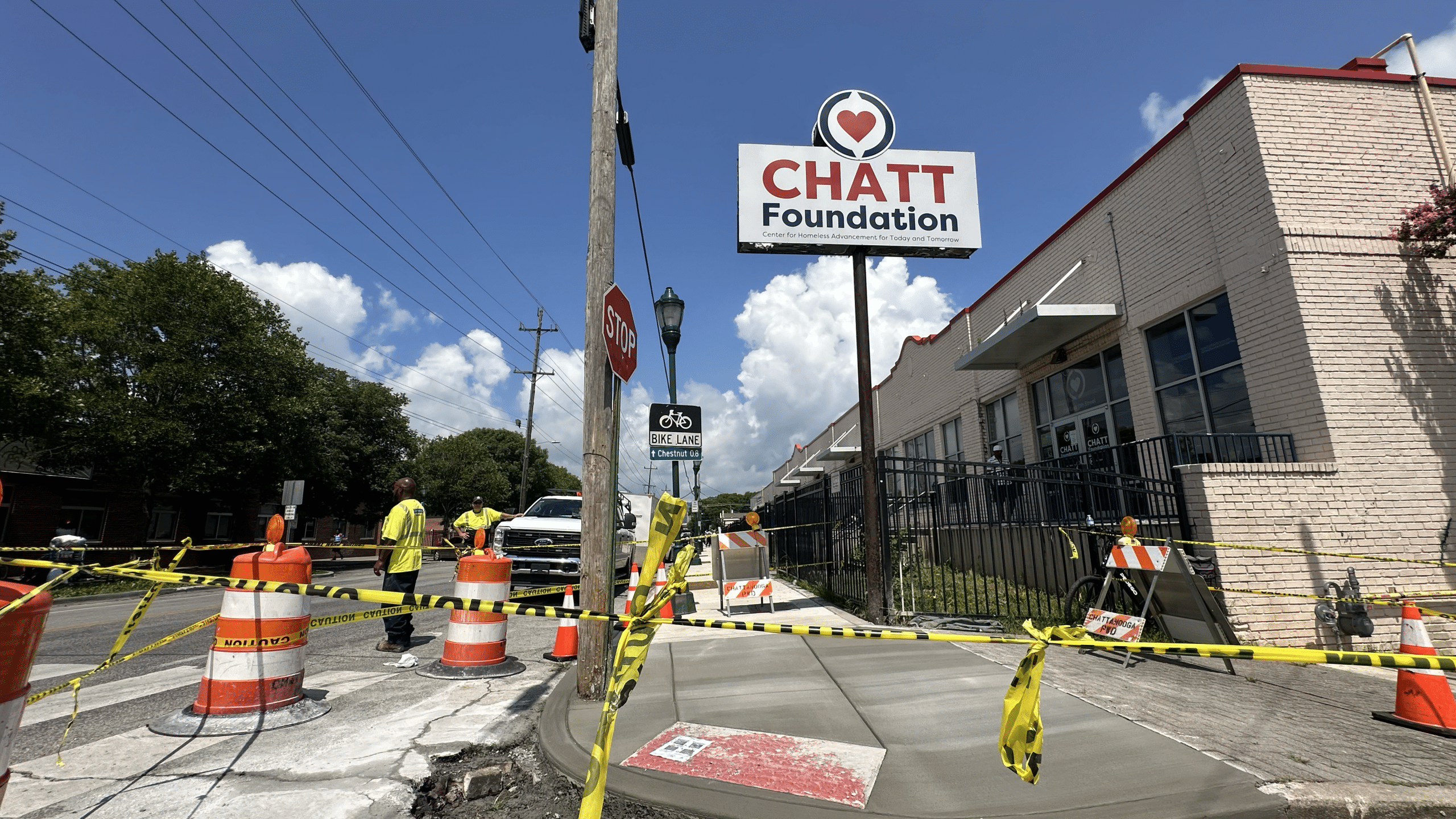
It was about 85 degrees on June 10 when the Chatt Foundation’s lunch hour began. Dozens of unhoused Chattanoogans lined up on the E. 11th Street sidewalk — repaved over the past three months — and made their way inside to eat. The Foundation does this every day, offering lunch until 12:30 and providing a mid-afternoon dinner.
This year, that wait is hotter than summers past. Starting at the end of March, city crews cut down 21 pear trees on the street’s north side to pave an ADA-compliant sidewalk, the Public Works Department has said. With them went thousands of square feet of cooling canopy.
“ Of any street in Chattanooga to have shade trees on it, that’s the most important one,” said Christina Gibson, chair of the Chattanooga Tree Commission. “And we removed them right at the beginning of the hot time of year.”
UPDATE, JUNE 25: Responding to a follow-up email about the awning install timeline, Public Works spokesman Errol Williams wrote: “We just heard from the installation vendor and they plan to install the week of July 13.”
‘Very poor timing‘
The work order to replace the sidewalk came through in November 2025, Williams told Chattamatters, after “numerous complaints” over time about loose pavers creating accessibility and safety concerns.
Tree roots were in the way. Repaving the sidewalk would have destroyed most of the existing pear trees’ critical root systems, City Forester Cole Johnson said, and “the trees would have fallen over before they died.”
The city forester, head of the Urban Forestry division within Public Works, is the final authority on the planting, care, and removal of public trees — those living in parks or along right-of-ways.
But when City Wide Services — also a division of Public Works — was ready to cut the trees in late March, Johnson wasn’t officially city forester yet. He was an interim department head, seeking a promotion to fill the position left by outgoing forester Pete Stewart.
One of Johnson’s first decisions with his interim authority was what to do with the trees. There are ways to protect trees amid construction projects, Johnson said, but saving a whole block’s worth of pear trees would have been expensive and required extensive planning.
So, he opted for removal, and Johnson said he thinks the city could have performed better outreach about the removal and repaving.
“ I’m a young leader in the city of Chattanooga, and whenever this was happening, I’m still just kind of getting my footing,” Johnson said. “And so communication with Chatt Foundation wasn’t as proactive as I would’ve liked for it to have been,” Johnson said.
Multiple media outlets quoted Chatt Foundation CEO Baron King in April saying he was not aware the tree removal was imminent. Chatt Foundation declined an interview for this story.
Williams told Chattamatters the city had discussed the project with the Foundation ahead of the cutting, “always” works with Urban Forestry on projects impacting public trees, and held multiple meetings about the sidewalk, which included the city’s homelessness office.
The Tree Commission, which advises Urban Forestry and hears appeals of the forester’s tree-related decisions, wasn’t notified in advance about the 11th street canopy loss, Gibson said. That’s not unusual given it’s up to Urban Forestry to decide the fate of public trees.
“ However, this is a really unique situation,” she said. “This is a really nuanced situation where environmental and social justices are overlapping.”
Johnson acknowledged that removing the trees right before summer was “very poor timing.”
“We should do what we can to mitigate the problem over the summer,” he said.
Beating the heat
Downtown Chattanooga has some of the hottest surface temperatures across the city, according to Trust for Public Land data cited in UTC researcher Charlie Mix’s 2024 project: “A city of Trees”. The research noted how urban trees can prevent heat islands, places where excessive ground temperature create more heat-related illnesses in the summer. Per the data, downtown has by far the least tree cover of any neighborhood studied.
“ I encourage folks to go take a walk down that section of 11th Street at 3 or 4 in the afternoon on a summer day,” Gibson, the Tree Commission chair, said. “You’ll see how uncomfortable and unsafe that kind of urban heat is for anyone, especially for someone who is already experiencing probably compromised health.”
Local data reflects Gibson’s concerns. The Chattanooga Regional Homeless Coalition spoke with unhoused community members as part of its 2025 report. Around half those asked self-reported a chronic health condition, such as cancer or heart disease.
Johnson decided to replace the removed pear trees with a smaller number of London plane trees set in larger tree wells. By using big, fast-growing trees, the city aims to replace the lost shade as soon as possible. Planting will happen this winter, and the trees will take years to grow full-size.
“ We need shade on 11th Street now, whether that’s provided by Public Works and Forestry or whether that’s provided by grassroots organizations,” Gibson said. ”It’s going to be really hot really soon and really dangerous on 11th Street without shade for those folks.”
Contact William at william@chattamatters.com
Author

Related Articles
Updated rules make historic home renovation a bit simpler
City Council approved new guidelines for renovations in Chattanooga’s four historic districts. Asking to add a shed now costs $40 rather than $190.
Should the county sell the BDC? Mayor Wamp and local entrepreneurs weigh in
Hamilton County commissioners will vote at their May 6 meeting whether to put the historic Business Development Center up for sale.
Unpaid parking tickets? CARTA plans to start booting this fall
Find out who is at risk of getting booted and how to check for outstanding parking tickets.