
City savings: How high is too high?
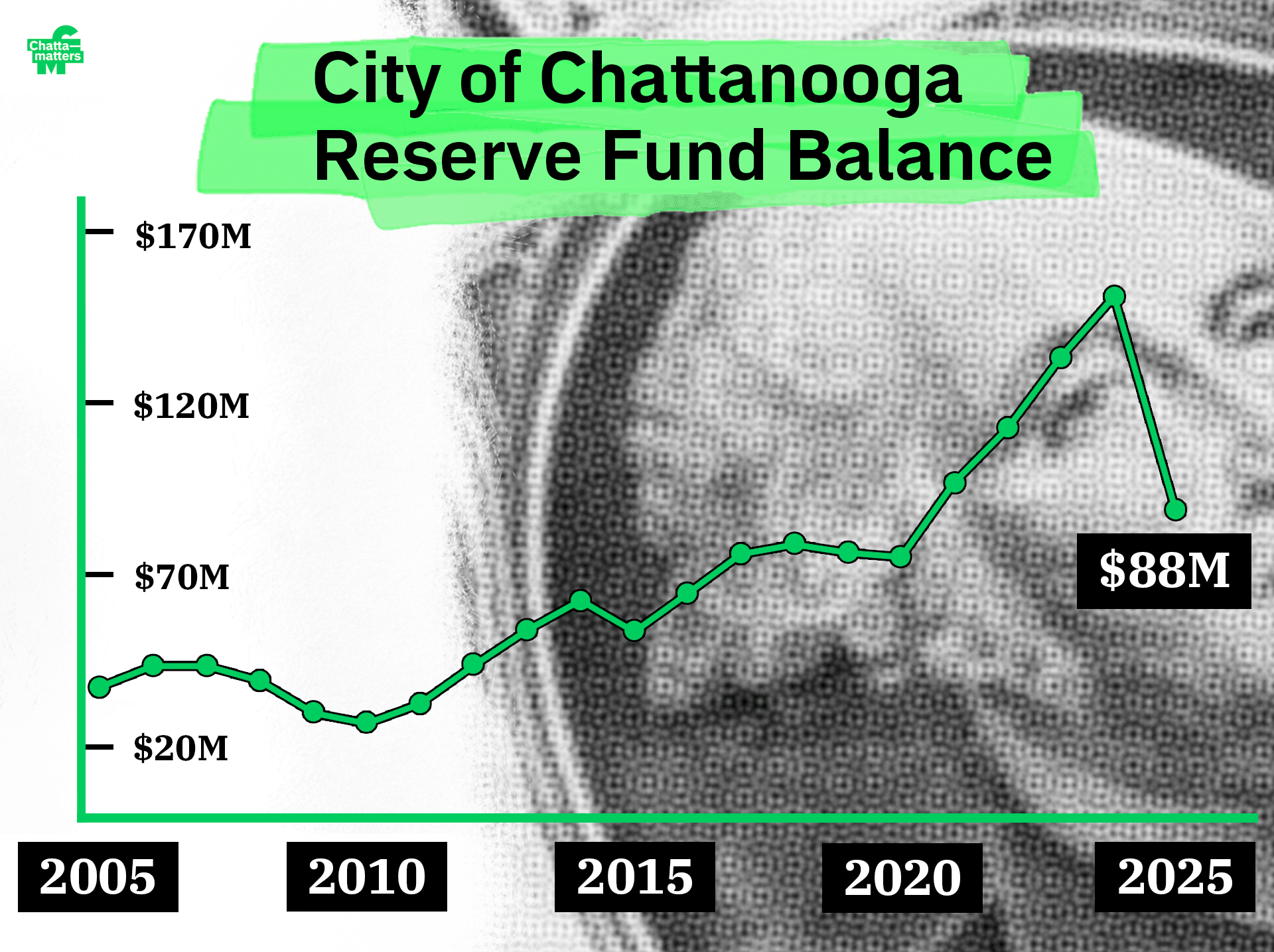
When Chattanooga’s city savings account reached about $153 million last June, officials decided it was time to start spending.
By William Newlin
When Chattanooga’s city savings account reached about $153 million last June — much higher than a healthy reserve fund needs to be — city leaders decided it was time to start spending.
Since then, City Council has approved two big withdrawals: $35 million went into the city’s current-year operating budget, and last month, Council agreed to put $30 million more toward fire and police pensions, infrastructure improvements, and other deferred projects.
“For those that think we’re raiding the piggy bank here,” Mayor Tim Kelly told City Council members at their Jan. 21 meeting, “We’ll have plenty left in the rainy day fund.”
Now, $88 million remain in reserves, serving as a safety net to cover emergency costs and keep the government funded during periods of low tax revenue.
Tennessee’s comptroller recommends cities have enough reserves to cover at least two months’ expenses. Despite the $65 million in reserve spending over the past year, Chattanooga’s savings are still more than 50% higher than the recommended minimum.
Where is the latest $30 million withdrawal going?
The $30 million appropriation will flow into two major buckets. More than half will bolster the fire and police pension fund, which for decades has struggled to keep up with what the city will owe public safety employees in retirement.
Another $12 million will pay for a host of projects, including sewer and road repairs, parks and community center improvements, studies on new library locations, and more. (Watch from the 22- to 48-minute mark to see all the approved projects, or see the amended annual budget here.)
“We’ve got this sort of excess surplus sitting here that’s not doing anything for us besides sitting in the bank,” said Eric Holl, advisor to Mayor Kelly. “Let’s go ahead and pay those bills now so that future Chattanoogans don’t have to pay them.”

Why are the reserves so high?
Reserve funds grow through budget surpluses. When revenues come in higher than expected and outpace city spending, the extra cash goes into reserves.
Long-standing, conservative budget practices have generated consistent surpluses for Chattanooga’s government, Holl said. The City of Chattanooga has added $19 million to its savings account on average over the past four years, and its $153 million balance last summer was nearly four times higher than in 2005.
Chattanooga isn’t alone.
In the past few years, steady spending by taxpayers has made local governments throughout Tennessee wealthier.
“So, we know that after the pandemic, sales taxes were greatly higher than we anticipated,” said Steve Osborne, a budgeting advisor to local governments in the state comptroller’s office. “Balances grew, and we can see it in our data set for all cities and counties across the board.”
States across the country have seen their nest eggs grow, too. Underestimated tax revenues and federal COVID relief dollars fueled the savings gains, according to a 2023 report by Pew. Tennessee’s rainy day fund more than doubled from 2019-2023.
Why spend the money now?
Holl said the city would have to address deferred funding priorities at some point in the future, and economic factors, such as inflation, can make road repair and pension payments costlier down the road.
“It’s much better to do it now from a position of strength and surplus,” Holl said. “ It’s a real long-term financial health thing.”
Other Tennessee cities have also begun drawing down their excess savings, Osborne said, although reserve spending hasn’t returned to pre-pandemic levels.
Contact William at william@chattamatters.com
Author

Related Articles

Chattamatters update: We’re launching an independent newsroom
We’re establishing an independent nonprofit newsroom. We have mostly paused publishing, as we gear up to serve you in a much bigger way in 2027.
Tree removal exposes unhoused Chattanoogans to summer heat
The city cut down 21 trees outside the Chatt Foundation for an accessible sidewalk. Despite a plan to replace some shade, people are still waiting in the sun.
Should the county sell the BDC? Mayor Wamp and local entrepreneurs weigh in
Hamilton County commissioners will vote at their May 6 meeting whether to put the historic Business Development Center up for sale.
