
Why everyday Tennesseans show up at the state capitol
Our state reps create and amend hundreds of bills every session. How can you have a say on them? Chattamatters went to Nashville to find out.
By William Newlin
A key goal for Chattamatters — aside from connecting Chattanoogans through local storytelling — is civic education. We’ve worked to demystify city, county, and state government so it’s easier for you to make decisions about your life and community.
I’ve covered state elections, laws, and policies for over three years with Chattamatters, but I’d never actually seen Tennessee lawmakers in action. Every year from January to April, state legislators create and amend hundreds of laws affecting life in Tennessee, from abortion to health care to pensions.
So, I decided to take I-24 out to Nashville to see how the sausage gets made.
First stop, Capitol Hill
Just one small detail — when I arrived, I realized I didn’t have to set foot in the actual capitol. A lot of the real work happens at the bottom of the hill in the Cordell Hull Building.
That’s where lawmakers meet in committees to debate and amend bills en route to becoming law.
Through a metal detector, up a staircase, and you’re in the middle of it all. Representatives, lobbyists, and regular Tennesseans all mingle together on the first floor around the committee rooms.

Sen. Bo Watson, who represents most of Hamilton County, chatted with a UTC student trying to research a decommissioned capitol art piece.
The public can attend any of the committees, and visitors come and go frequently. Meanwhile, elected officials meet with their constituents throughout the day in their offices upstairs.
Rep. Justin Pearson, representing part of Shelby County, greeted a small crowd in one of the House-level hallways.
Despite several attempts, I couldn’t land a video interview with my two representatives, Sen. Todd Gardenhire and Rep. Greg Martin. Although I did shake hands with them in the hallway.
Why Tennesseans show up
Cordell Hull was packed with civic-minded folks from across the state, and everyone I talked to shared a similar message: Showing up in person is a meaningful statement.
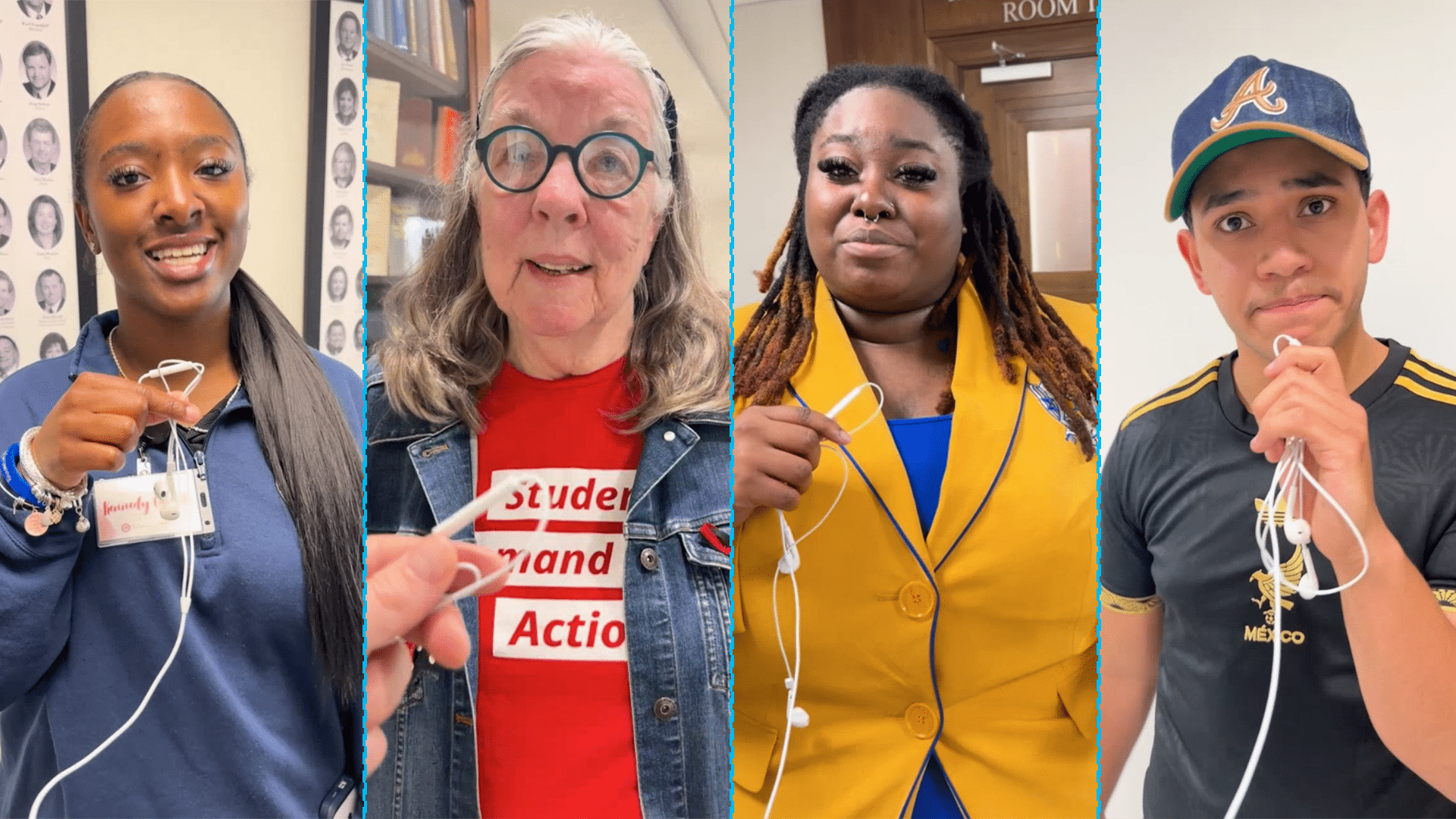
“You can have a lot of power at the state level,” said Linda McFadyen-Ketchum, a volunteer organizer with Moms Demand Action for Gun Sense in Tennessee. “If you sit at home and fuss and complain or whine or cry, that’s no good. It doesn’t help. It’s very mystifying at the first, but sometimes if all you can do is stand up with others, that’s enough.”
Paris Lewis-Washington was visiting with her sisters from the Sigma Gamma Rho sorority — you couldn’t miss their matching gold blazers, trimmed with royal blue.
A bit troubled, she had just left a hearing featuring a bill related to children in foster care. With personal experience in the foster care system, Lewis-Washington said she worried the bill didn’t protect kids’ quality of life. That reinforced her belief in having a say.
“ Many people just seem to be passing bills, not questioning certain things,” She said. “Who’s going to stand up? There are questions that need to be asked, and we deserve answers.”
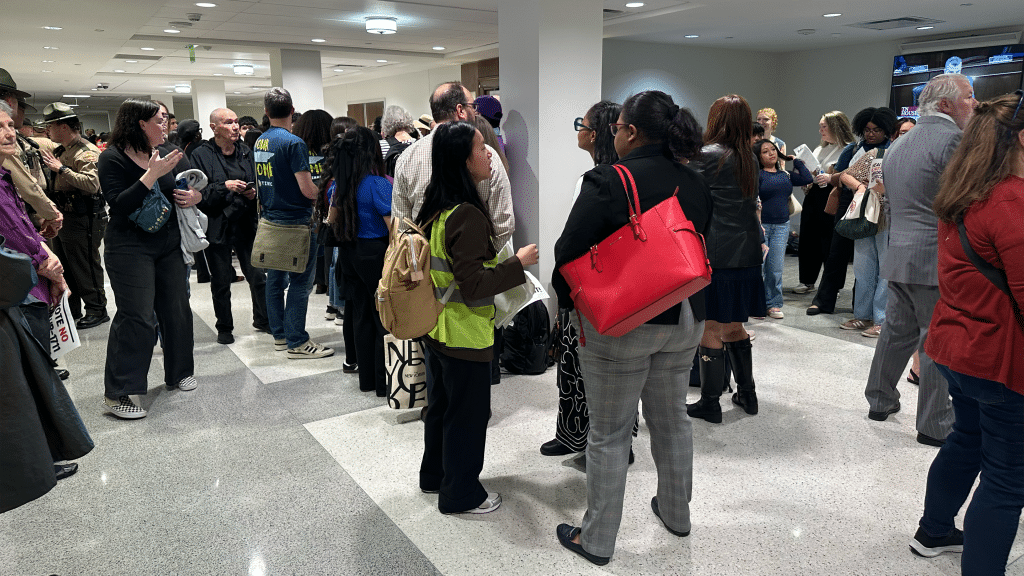
By early afternoon, the crowds had swelled (along with the room temperature on the first floor). A large group organized in part by the Tennessee Immigrant & Refugee Rights Coalition, including a gaggle of UTC students, gathered for the House Local & State Government Committee.
They opposed House Bill 1711, which would require local governments, schools, hospitals, and other public agencies to report all undocumented immigrants who use their services. Local officials would also have to report any fines imposed on or criminal arrests of undocumented residents.
Freddy Concepción drove the 20 or so miles from La Vergne (which touts itself as the “The Freest City in Tennessee”) to attend. A recent high school graduate, he said if he hadn’t come, he’d be doing a disservice to his parents, who are immigrants. The committee room had filled, so Concepción watched on a screen in the hall.
“Even if you can’t make it, you could always email, call, do whatever you can, but just stick to your community, and I promise we can make a difference,” he said.
Inside the room, a blast of boos greeted the bill when it came up for a vote. Lawmakers deferred making a decision for another week.

What I took away
We got a comment on the video about my trip. Our viewer wrote:
“Going in person is so much less intimidating than it seems! Highly recommend.”
She’s right. As McFadyen-Ketchum told me — navigating the state halls of power can at first be mystifying. But as Concepción and his cohort showed me — sharing your voice can be effective.
Just browsing the weekly schedule and walking around, you quickly get a sense of how things work. You see relationships, you hear the rote, lawyerly way bills shuffle toward the governor’s desk, and — given the sometimes heated disagreements between politicians — you might be surprised by the collegial nature of the place.
Meeting your lawmaker tears down the curtain. It reminds you that they’re no different from your neighbors. They’re parents, employees, church members, and soccer coaches. And they have a responsibility to represent your interests.
So, whether you feel the need to stand up for a cause or just want to share your community’s concerns, keep in mind what our video commenter wrote:
“Being in the room where it happens is fascinating”
Contact William at william@chattamatters.com
Author

Related Articles

Chattamatters update: We’re launching an independent newsroom
We’re establishing an independent nonprofit newsroom. We have mostly paused publishing, as we gear up to serve you in a much bigger way in 2027.

Tree removal exposes unhoused Chattanoogans to summer heat
The city cut down 21 trees outside the Chatt Foundation for an accessible sidewalk. Despite a plan to replace some shade, people are still waiting in the sun.

Chattamatters’ Art in a Minute
Art in a Minute is a segment where we profile artists from all over Hamilton County … in about a minute.