Understanding the two proposals for Chattanooga’s tax rate
Here’s how each City Council member has weighed in.
By William Newlin
Chattanooga City Council is scheduled to decide a property tax rate on Aug. 26, and there’s two options on the table.
One is the $1.93 rate proposed by Mayor Tim Kelly after some City Council members pushed back on his original $1.99 proposal. The other is a $1.69 rate sponsored by two Council members, which drew sharp criticism from some of their colleagues in an Aug. 12 public meeting.
There are some big differences between the two proposals, both in terms of what they can pay for, and what they mean for taxpayers. Let’s take a look.
How has your City Council representative weighed in? You can find your Council district and representative here, and look for their name highlighted below.
Tax plans at a glance:
Mayor’s proposal:
- $1.93 tax rate
- Generates enough revenue to provide salary increases for police officers and firefighters. Provides another $26 million for other projects, including road paving, parks maintenance, and down payment assistance
- The administration has said the additional funds are needed to catch up with inflation, which has made it more difficult for the city to keep up with costs
Alternative proposal from Councilmen Henderson and Davis:
- $1.69 tax rate
- Includes budget cuts to most city departments, totaling about $8 million
- Generates enough revenue to provide salary increases for police officers and firefighters
- Sponsors have said the city will have to consider gradual tax increases in the coming years to address inflation and the mayor’s other priorities
*Unless otherwise noted, quotes from Council members come from their Aug. 12 meeting.
Why two proposals?
- The Kelly administration has long planned to increase taxes in part to raise police and fire pay. But some on City Council balked at the original proposal for a $1.99 rate, which would bring in more money than what’s needed for the raises.
- ”That’s my concern,” Councilman Cody Harvey, District 4, said in a July 29 meeting. “There’s been things added on since we’ve discussed seven days ago when the answer was ‘Yes, it’s only fire and police pay that will be addressed.’”
- Councilwoman Jenny Hill, District 2, drafted a different proposal with several tax rate options and cuts to the budget approved by Council back in June.
- In an Aug. 12 email to constituents, Hill said District 2 residents “want our city government to focus on the things that we count on most (fire, police, public works, parks) and tighten spending on nonessentials.”
How the alternative plan happened
- Councilmen Chip Henderson, District 1, and Jeff Davis, District 3, opted to sponsor an alternative plan based on Hill’s recommendations, meaning it would go before Council for a vote. Henderson called for the Aug. 12 meeting for Council to decide what that alternative plan would be.
- Along with Davis, Henderson and Hill settled on the $1.69 figure in response to their colleague’s concerns about cuts. They have suggested gradual tax increases over the next few years to fund priorities beyond police and fire pay.
- “That at least allows us some room to come back next year and look at another 8% or a 9% increase to address whatever inflationary costs that we’ve incurred over that past year and address some of the concerns that is in the mayor’s proposal,” Henderson said.
Criticism of budget cuts
- Several Council members said budget cuts would cause unforeseen and unequal impacts across the city. The alternative plan would require the Kelly administration to decide which items to eliminate from the budget.
- ”If we’re going to do this, let’s do it responsibly,” Councilman Ron Elliott, District 9, said of the alternative proposal. “Because if we put a mandate on the administration that leads to undue, unspoken consequences, we’re at fault.”
- Councilman Dennis Clark, District 5, agreed that without going line-by-line to find places to trim the budget, Council wouldn’t control what would get cut or the effect it would have on constituents. Clark left the Aug. 12 meeting early after saying the alternative plan was “not responsible government.”
- Proposed reductions to the city’s Community Development and Early Learning departments caused the most pushback. Councilwoman Marvene Noel, District 8, said those cuts carried “racial undertones” and would “affect Black and brown people tremendously.”
- Both Noel and Councilwoman Raquetta Dotley, District 7, said they wanted their districts to receive 100% of the funds approved in the June budget.
- ”Surely you wouldn’t expect my district to take a hit when I already voted for them to get the services,” Dotley said.
- Councilwoman Jenni Berz, District 6, suggested finding a tax rate somewhere in the middle of the two proposals to address police pay and make yearly tax increases smaller. Council did not move forward with Berz’s middle-ground approach.
- Ultimately, the $1.69 rate does not include cuts to Community Development or Early Learning. But it still leaves it up to the administration to make about $8 million in reductions elsewhere.
What’s next
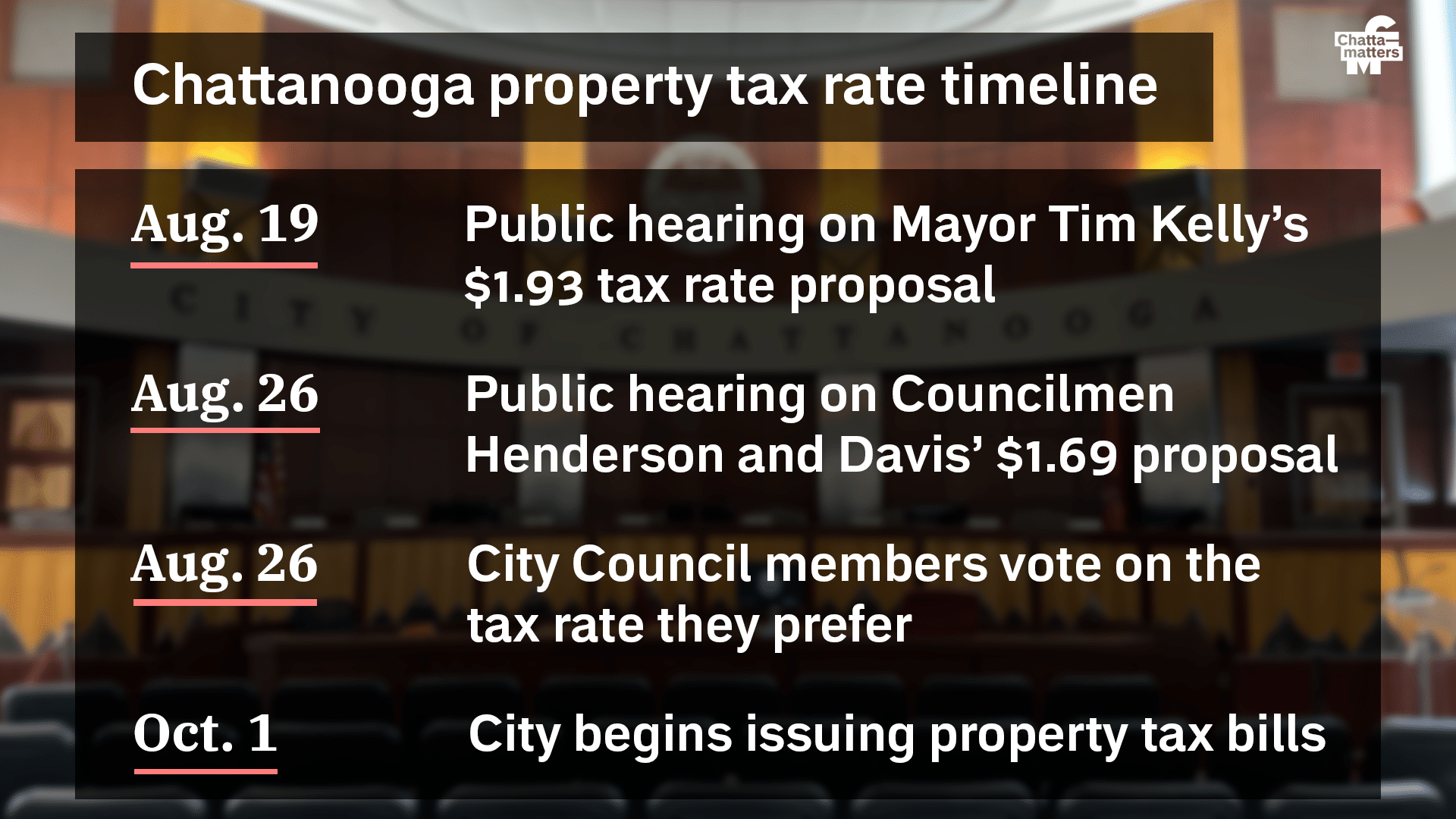
- Aug. 19, 3:30 p.m. — Public hearing on the mayor’s $1.93 rate. Council will open up the public hearing to begin the meeting. Community members can line up to speak and have two minutes each to make comments.
- Aug. 26, 3:30 p.m. — Public hearing on Henderson and Davis’ $1.69 rate
- Aug. 26 during Council business meeting — Both tax proposals will go before City Council as ordinances. Council members will vote for the option they prefer. An ordinance needs to receive at least five votes at two consecutive meetings to take effect.
Contact William at william@chattamatters.com
Author

Related Articles

Compost and glass recycling pilot: What to know to participate
NewTerra Compost and Overlooked Materials partnered with the City of Chattanooga to reduce unnecessary landfill waste.
Is there a better way to park downtown?
CARTA CEO Charles Frazier has a pitch for parking bliss: Stop circling the block, and let the free shuttles take you where you want to go.